

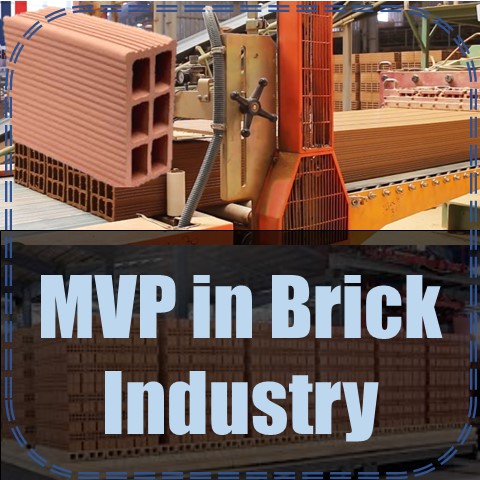
Applying MVP in brick industry
in this paper we discussed about the MVP approach in developing brick industry.
In business management the Minimum Viable Product (MVP) means a version of a product with just enough features to be used by early customers and collect feedback for future development. The MVP don’t need to be fully developed as an enormous project. It can start small and grow big by developing in a feedback loop strategy. This is a new method of continuous development of business models. In this paper, we examined different dimensions and challenges of this method for applying in brick industry.
How MVP can be important in business?
Using MVP in the Brick Industry: A Practical Guide
Using MVPs for Export Companies
Export Companies: A Global Business Landscape
Key Characteristics of Export Companies
Strategies for Successful Exporting
1. Market Research and Validation
4. Distribution Channel Testing
What is MVP?
MVP stands for Minimum Viable Product. It's a version of a product with just enough features to be usable by early customers and collect feedback for future development.
Key points about MVPs:
- Minimal Functionality: They focus on core features that solve a specific problem for users.
- Early Release: They are released early in the product development cycle.
- Customer Feedback: They are used to gather feedback from real users, helping to refine the product and ensure it meets market needs.
- Iteration: Based on feedback, MVPs can be iterated upon and improved over time.
Why should we use an MVP?
- Reduces Risk: By releasing a basic version early, you can validate your product idea and minimize the risk of investing in a product that doesn't resonate with the market.
- Faster Time to Market: MVPs allow you to get your product to market quickly, gaining valuable insights and potentially beating competitors.
- Focus on Core Value: By focusing on essential features, you can prioritize what truly matters to your customers.
Example: A social media platform's MVP might initially only allow users to create profiles, post text updates, and follow other users. Later iterations could introduce features like photo sharing, messaging, and video uploads based on user feedback.
Would you like to know more about how to create an MVP or its benefits in specific industries?
How MVP can be important in business?
Today, the MVP approach is considered as a new business development approach in the world. This method can be used as a remarkable way of developing new businesses.
MVPs are crucial in business for several reasons:
- Risk Mitigation: By launching a basic version of your product, you can test market demand and avoid investing heavily in a product that may not be successful.
- Faster Time to Market: MVPs allow you to get your product to market more quickly, potentially beating competitors and gaining a first-mover advantage.
- Customer Feedback: MVPs provide valuable feedback from real users, helping you refine your product to better meet their needs and preferences.
- Prioritization: Creating an MVP forces you to focus on the most essential features of your product, ensuring that you allocate resources effectively.
- Continuous Improvement: MVPs can be iterated upon based on customer feedback, allowing you to continuously improve your product and stay ahead of the competition.
- Resource Efficiency: MVPs can be developed with fewer resources, making them a more cost-effective way to test your product idea.
- Investor Confidence: A successful MVP can demonstrate the viability of your product concept, making it easier to attract investors and secure funding.
In business, MVPs are a valuable tool for businesses looking to minimize risk, accelerate time to market, gather customer feedback, and prioritize development efforts.
Using MVP in the Brick Industry: A Practical Guide
The brick industry is a sector involved in the production and distribution of bricks, a common building material used for construction. Bricks are typically made from clay, fired in a kiln, and used as a unit in masonry construction. The bricks are usually created by mixing loose soils in loose geologic formations. The industry plays a crucial role in the construction sector, providing a versatile and durable building material. The products can compose a critical part of economic development of any country. Bricks are used in a wide range of applications, including:
- Residential construction: For building walls, floors, and other structural elements.
- Commercial construction: For constructing buildings such as offices, retail spaces, and industrial facilities.
- Infrastructure projects: For building roads, bridges, and tunnels.
- Landscaping: For creating decorative features such as walls, patios, and walkways.
The brick industry involves various processes. The suitable soil mines are explored and after discovered, they soils are exploited and conveyed to factories. The soils are mixed and prepared for framing in special shapes. Then, the shaped bricks are hot in special ovens to be hard enough for using them as brick in buildings. The main processes of the brick industry are including:
- Clay extraction: Sourcing and processing clay from natural deposits in particular geologic formations.
- Brick forming: Shaping the clay into bricks using machines or molds. There are a wide variety of shapes for different building style.
- Drying: Allowing the bricks to dry before firing.
- Firing: Heating the bricks in a kiln to harden and strengthen them. The drying process makes the framed shapes hard and applicable for using in buildings.
- Glazing (optional): Applying a coating to the bricks to enhance their appearance or provide additional protection. In this final stage, the bricks are actually prepared for use in buildings.
After the final stages is done, the products can be prepared and packaged for export or selling in local markets. The brick industry can be found in many countries around the world, with varying levels of production and technological advancement.
Understanding the Brick Industry's Unique Challenges
The brick industry, while seemingly traditional, faces unique challenges in today's competitive market. However, the industry can be developed with 3D Printing technology to gain special advantages. The principal challenges in the industry include:
- High capital investment: Setting up a brick manufacturing plant requires significant upfront costs. The costs are related to buying mines, exploring and exploiting the soils, and process costs of the factory.
- Long production cycles: The process of producing bricks is time-consuming. It takes a huge resource from exploration to final packaging.
- Material sourcing and logistics: Ensuring a steady supply of raw materials and efficient transportation can be complex.
Applying MVP Principles to the Brick Industry
Despite these challenges, MVP principles can be applied to the brick industry to mitigate risks and optimize product development.
- Focus on Core Features:
- Basic brick types: Start with producing a limited range of standard brick types, such as common bricks and facing bricks.
- Essential functionalities: Ensure the bricks meet basic structural and aesthetic requirements.
- Minimal Viable Plant:
- Smaller-scale production: Consider setting up a smaller-scale brick manufacturing plant to reduce initial investment.
- Modular design: Design the plant to be expandable, allowing for future growth as demand increases.
- Prioritize Market Validation:
- Local market research: Conduct thorough research to identify local demand for brick products.
- Target specific applications: Focus on specific applications, such as residential construction, commercial buildings, or landscaping.
- Iterative Development:
- Customer feedback: Gather feedback from builders, architects, and end-users to understand their preferences and needs.
- Product variations: Introduce new brick types or variations based on customer feedback.
- Leverage Technology:
- Efficient production processes: Implement modern technologies to improve production efficiency and reduce costs.
- Sustainable practices: Explore sustainable manufacturing methods to enhance environmental appeal.
Example: A Brick Manufacturing MVP
- Core product: A basic red clay brick for general construction.
- Minimal plant: A smaller-scale plant with a daily production capacity of 10,000 bricks.
- Target market: Local residential construction projects.
- Feedback loop: Engage with builders and architects to gather feedback on product quality, appearance, and pricing.
By applying MVP principles, the brick industry can reduce risks, accelerate time to market, and ensure that products meet the specific needs of the market.
Would you like to explore specific MVP strategies for a particular aspect of the brick industry, such as product design, marketing, or distribution?
Using MVPs for Export Companies
Export Companies: A Global Business Landscape
Export companies are businesses that sell their products or services to customers in foreign countries. They play a vital role in the global economy, contributing to job creation, economic growth, and cultural exchange.
Key Characteristics of Export Companies
- International Focus: These companies have a specific focus on selling their products or services beyond their domestic market.
- Global Supply Chains: They often manage complex supply chains that span multiple countries.
- Cultural Sensitivity: Understanding and adapting to different cultural nuances is essential for successful exports.
- Regulatory Compliance: Adhering to international trade regulations, customs procedures, and import/export laws is crucial.
Benefits of Exporting
- Market Expansion: Accessing new markets can increase sales and revenue.
- Risk Diversification: Reducing dependence on a single domestic market can mitigate risks.
- Economies of Scale: Producing larger quantities for export can lead to cost savings.
- Job Creation: Export companies often create jobs both domestically and in the countries they export to.
Challenges of Exporting
- Language and Cultural Barriers: Misunderstandings can arise due to language differences and cultural nuances.
- Trade Restrictions: Tariffs, quotas, and other trade barriers can hinder exports.
- Logistics Challenges: Coordinating transportation, customs clearance, and delivery can be complex.
- Currency Fluctuations: Exchange rate fluctuations can impact profitability.
Strategies for Successful Exporting
- Market Research: Thoroughly understand the target market, including consumer preferences, cultural factors, and competitive landscape.
- Product Adaptation: Tailor products to meet the specific needs and preferences of foreign customers.
- Pricing Strategy: Consider factors like currency fluctuations, transportation costs, and tariffs when setting export prices.
- Distribution Channels: Establish effective distribution networks in foreign markets.
- Regulatory Compliance: Ensure compliance with all relevant export regulations and standards.
- Cultural Sensitivity: Train employees to be culturally aware and respectful.
- Risk Management: Develop strategies to mitigate risks associated with currency fluctuations, political instability, and trade barriers.
Would you like to know more about specific export markets, strategies, or challenges?
MVPs (Minimum Viable Products) can be a powerful tool for export companies to test new markets, minimize risks, and optimize product offerings. for the products, the related companies can also use digital marketing methods to get the most purchase worldwide. Here's how:
1. Market Research and Validation
- Limited Product Launch: Introduce a simplified version of your product to the target market.
- Gather Feedback: Monitor customer response, preferences, and purchasing behavior.
- Adjust Strategy: Use insights to refine your product, pricing, and marketing strategies for the export market. These ideas can depend on business plan of the companies in the volatile environment of the business.
2. Risk Mitigation
- Reduced Investment: Minimize upfront costs by launching a smaller-scale product.
- Test Market Demand: Assess the viability of the export market before committing significant resources.
- Avoid Failures: Identify potential issues early on and make necessary adjustments.
3. Cultural Adaptation
- Localized MVP: Tailor your product to the specific cultural preferences and needs of the target market.
- Test Local Preferences: Gauge consumer response to localized features and modifications.
- Avoid Cultural Missteps: Prevent costly mistakes by understanding local customs and expectations.
4. Distribution Channel Testing
- Experiment with Channels: Try different distribution channels, such as online marketplaces, physical stores, or distributors.
- Identify Best Fit: Determine which channels are most effective in reaching your target audience.
- Optimize Distribution: Adjust your distribution strategy based on channel performance.
5. Regulatory Compliance
- Navigate Regulations: Use MVPs to understand and comply with local regulations and standards.
- Identify Hurdles: Discover potential barriers to entry and address them proactively.
- Ensure Smooth Launch: Minimize legal and regulatory risks before a full-scale launch.
6. Continuous Improvement
- Iterative Development: Use feedback from the MVP to refine your product and services.
- Stay Competitive: Adapt to changing market conditions and consumer preferences.
- Build Customer Loyalty: Foster long-term relationships by providing value and addressing customer needs.
Example: An export company selling kitchen appliances could launch an MVP in a new market by offering a limited range of products online. By monitoring sales, customer reviews, and website traffic, they can assess market demand, identify cultural preferences, and adjust their product offerings and marketing strategies accordingly. By effectively utilizing MVPs, export companies can minimize risks, accelerate market entry, and optimize their product offerings for global success.
MVP strategies in brick industry can make a technological competitive advantage for traditional companies.